Table of Contents
Nobody warns you that the divorce is the easy part. Co-parenting post-divorce is the part that doesn’t end. It’s the 9pm text demanding a schedule change. It’s the bedtime question about why Dad doesn’t live here anymore. This guide isn’t about becoming best friends with your ex. It’s about building a structure that keeps your kids out of a fight that isn’t theirs.
S.J. Howe built this guide with a counsellor co-author. Howe has lived through betrayal and separation. The frameworks here come from someone who has actually managed handoffs with a difficult ex, not just read about them.
What Co-Parenting Post-Divorce Actually Requires (And What It Doesn’t)
Co-parenting doesn’t mean liking each other. It doesn’t mean joint holidays or a group chat with inside jokes. It means two households making coordinated decisions about the same kids, without using those kids as messengers, weapons, or spies.
The “friendly divorce” myth causes more harm than it prevents. It sets an impossible bar. When you can’t hit it, you feel like you’re failing your kids twice. Real co-parenting looks like business logistics, not friendship. That’s not cold. That’s the goal.
Co-Parenting vs. Parallel Parenting: Which One Fits Your Ex
Cooperative co-parenting works when both parents can talk directly, compromise, and keep emotion out of logistics. It requires a baseline of trust that a lot of post-divorce relationships simply don’t have, especially in the first year or two.
Parallel parenting is the realistic default for high-conflict exes. Each parent runs their own household on their own terms. Contact stays minimal and structured, usually through a shared calendar or app instead of conversation. Decisions get divided by domain instead of negotiated jointly every time.
Family courts and co-parenting counselors increasingly recommend parallel parenting for couples with ongoing conflict. It’s not a downgrade or a failure state. It’s a more honest structure than forcing cordiality that isn’t there yet. If every exchange with your ex turns into an argument, parallel parenting isn’t giving up. It’s protecting your kids from watching that argument happen.
Setting Ground Rules for Communication With Your Co-Parent
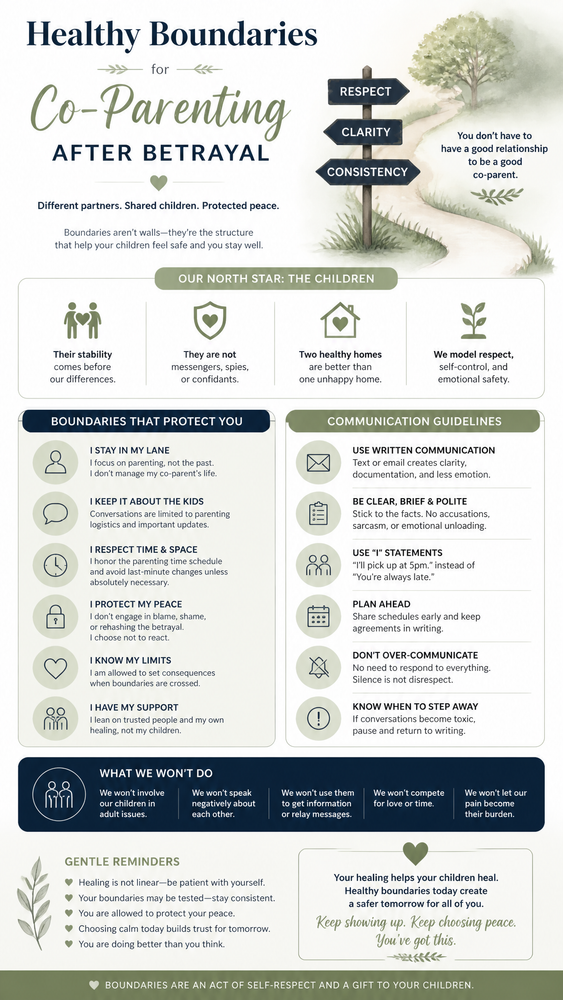
Most co-parenting conflict isn’t about the kids. It’s about unresolved resentment leaking into logistics. The fix isn’t better feelings. It’s better rules.
Set a tone standard before you need it: business-only language, no relationship references, no jabs. Decide on response windows, like 24 hours for non-urgent messages, so nobody feels ignored or ambushed. Write these down, even informally, so both of you know what “reasonable” looks like.
Choosing a Channel: Text, App, or Email
Pick one documented channel and stick to it. A co-parenting app that logs messages and timestamps works best for high-conflict situations. It removes the “he said, she said” problem. Email works if an app feels like overkill. Text is fine for low-conflict logistics, but it disappears into other conversations and gets harder to reference later.
Whatever you choose, keep it singular. Splitting communication across five platforms means something always gets missed. Missed messages become new arguments.
When to Go No-Contact Except for Logistics
Some exes can’t have a normal conversation without turning it into a referendum on the marriage. If that’s your situation, go no-contact except for scheduling and safety. That means no phone calls, no “just checking in,” no venting.
This is the same logic behind no-contact scripts if the affair was with a coworker: boundaries work best when they’re absolute, not negotiated case by case. A partial no-contact rule gets tested constantly. A firm one gets respected faster.
If you need help building the actual rules for this, not just the theory, there’s a full communication rules for co-parenting after infidelity session that walks through wording, tone, and boundaries step by step.
Building a Custody and Routine Structure Kids Can Count On
Kids don’t need parents who get along. They need parents who are predictable. A clear custody schedule, followed consistently, does more for a child’s sense of safety than any amount of forced warmth between parents.
Write the schedule down. Post it somewhere the kids can see it, if they’re old enough to read a calendar. Keep bedtime, homework rules, and screen time as close to consistent as possible across both households. Kids adjust to two homes. They struggle with two sets of unpredictable rules.
Handling Handoffs Without a Scene
Handoffs are where conflict is most visible to kids, so they need the tightest script. Keep them short. Keep them logistical. Say what time you’re picking up, hand over the backpack, and leave.
Don’t use the handoff to raise a grievance about last week’s late pickup or an unpaid expense. Save that for your documented channel, not the driveway. If a conversation needs to happen, schedule it separately, away from the moment your kid is standing there watching your face.
Neutral handoff locations, like school pickup instead of a driveway exchange, remove a lot of friction automatically. If tension runs high, pick a public spot with other people around. It naturally keeps both parents’ behavior in check.
What to Say to Your Kids About the Divorce and Co-Parenting
Kids can handle honesty. What they can’t handle is confusion, or feeling like they’re being managed. Age-appropriate honesty beats a script built only to reassure.
That doesn’t mean detailing every reason for the divorce. It means giving a true, simple explanation your child can hold onto: the marriage ended, both parents still love them, and the new routine, while different, is stable. Avoid blaming language even if one parent’s actions caused the split. Kids often internalize blame talk as something they have to referee.
For the exact wording, broken down by age and by what your child is actually asking, what to say when your child asks why you’re divorcing walks through specific scripts rather than vague reassurance.
Reading this won’t change tomorrow’s message
You Know the Tactic Now. Do You Know What You’ll Actually Do When It Lands?
Understanding grey rock is not the same as doing it at 9pm when your phone buzzes. Most parents can explain the theory perfectly and still bite the bait every single time. The gap between the two is exactly what the free self-check measures.
Get Your Ex Out of Your Head →5 scenarios · scored result · 4 minutes · free
Protecting Yourself When Your Ex Is Difficult or Manipulative
Documentation isn’t about building a case against your ex out of spite. It’s about protecting yourself, and your kids, if things escalate. A difficult co-parent counts on you having no record, no proof, nothing but your word.
Family court professionals and child psychologists have long pointed out that it isn’t divorce itself that predicts poor outcomes for kids. It’s ongoing parental conflict. Documentation, done right, reduces that conflict. It takes the guesswork and the arguing over “what actually happened” off the table.
Documenting Communication Without Becoming Obsessive
Keep records of anything relevant to custody, money, or the kids’ wellbeing: missed pickups, broken agreements, concerning messages. A single app or folder works better than scattered screenshots across five different places.
Don’t let documentation become a full-time job. Log what matters. Skip the petty stuff. If you’re capturing every slightly annoying text, you’re not protecting yourself anymore. You’re staying in the fight.
A full breakdown of what to log, how to store it, and how to keep it useful instead of overwhelming is covered in how to document communication with a difficult ex.
Red Flags That Mean You Need a Paper Trail
Certain patterns mean documentation stops being optional. Repeated no-shows for custody exchanges. Messages that threaten, manipulate, or try to turn kids against you. Financial noncompliance, like refusing agreed-upon support. Any sign the kids are being coached to relay messages or spy.
If you’re seeing any of these, start logging now, even if you never end up needing the record in court. It’s much harder to reconstruct a pattern after the fact than to have it already written down.
When Co-Parenting Isn’t Working: Knowing What to Fix vs. What to Escalate

Not every rough patch means the system is broken. Some friction is just two people adjusting to a new normal. A missed message, a scheduling mix-up, a bad week where tempers run short. A clearer rule or a tighter boundary usually fixes these, not a lawyer.
Escalation becomes necessary when the same conflict repeats despite clear rules, when your ex ignores the custody agreement outright, or when a child’s safety or wellbeing is genuinely at risk. It’s also time to escalate if communication has broken down so completely that even logistics can’t get handled without a fight.
Mediation is the middle step for most disputes. It’s less expensive and less adversarial than court, and it works well when both parents are willing but keep hitting the same wall. A lawyer or a formal revision of the parenting plan becomes necessary when one parent won’t comply, or when the current plan no longer fits the kids’ age or needs.
If you’re still deciding whether the relationship itself is salvageable before you get to any of this, a decision framework for staying or leaving after an affair is worth working through first. Co-parenting structure only matters once that decision is actually made.
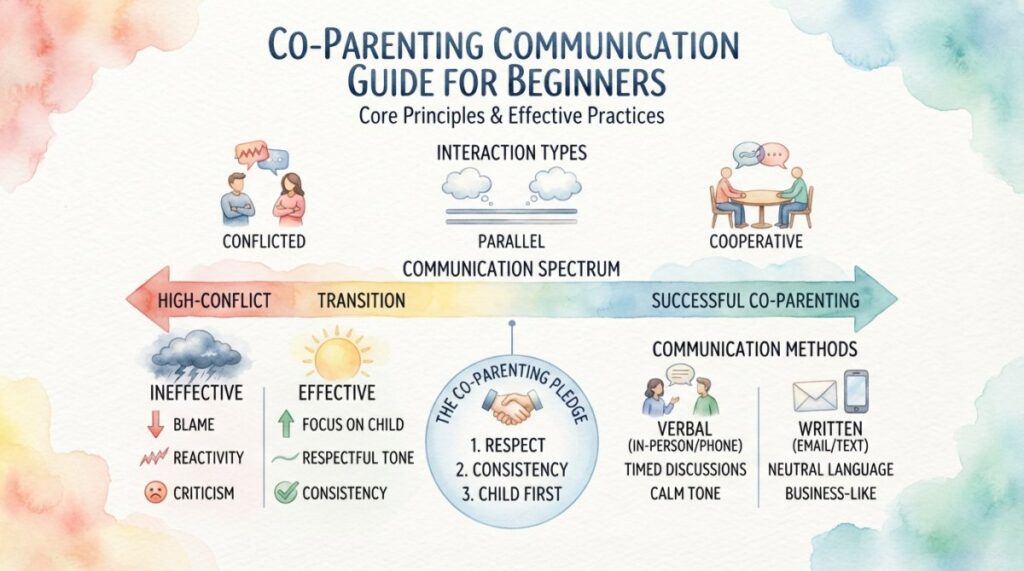
Whichever stage you’re at, the through-line is the same. Kids don’t need their parents to be friends. They need a structure solid enough that they never have to pick a side, carry a message, or manage anyone’s feelings but their own. If your communication with your ex is where things keep breaking down, that’s the piece worth fixing first. It’s exactly what the communication rules for co-parenting after infidelity session is built to help you set.