Table of Contents
“Just communicate” is the advice everyone gives after an affair. It’s also useless at 11pm, when a notification lights up your partner’s phone and your hands go cold before you’ve even read it.
That moment doesn’t need a philosophy. It needs a script.
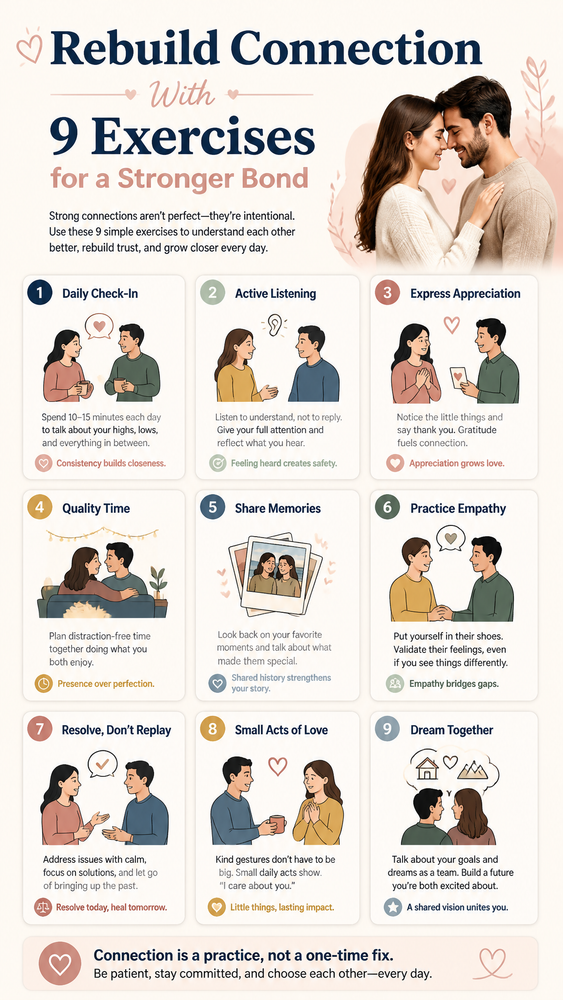
This article skips the theory. It gets straight to rebuilding trust after infidelity exercises you can use tonight, at the door after a late night out, mid-conversation when a memory ambushes you, or the third time this week you’ve thought about checking their phone. Nine exercises, tied to nine real flashpoints, each with exact wording. S.J. Howe built this from lived experience with betrayal and separation, co-written with a counsellor. Every exercise here is stress-tested against a real flashpoint, not a textbook scenario.
Why ‘Just Communicate’ Doesn’t Rebuild Trust After Cheating
“Communicate more” fails for a simple reason. It doesn’t tell you what to say when your chest is tight and your partner is fifteen minutes late texting back.
Couples counsellors who work with infidelity cases see this pattern often: vague commitments like “just communicate more” don’t change behavior in the exact moment trust is being tested. Specificity makes an exercise usable at 11pm, not just at a calm Sunday debrief.
So this list trades abstractions for scripts. Say this. Do this. Then do it again next week.
Before the exercises, here’s the honest answer to the question everyone asks first: how long does it take to rebuild trust after an affair? Not days. Most couples working through affair recovery describe trust returning in visible fractions over 12 to 24 months. It doesn’t snap back all at once, especially when both partners practice concrete rebuilding behaviors instead of just talking about doing better.
What Makes an Exercise Actually Work in the Moment
A working exercise has three things: a trigger, a script, and a repeat. The trigger names the exact situation, a late notification, a missed check-in text, a smell that pulls up a memory. The script gives both partners exact words, so no one improvises while upset. The repeat means you run it more than once. Trust rebuilds through pattern, not a single grand gesture.
If an exercise only works when both people are calm and rested, it isn’t finished. It has to survive a bad Tuesday.
Trust Rebuilding Exercises for Couples: The Phone and Location Flashpoints
The 9pm phone-check spiral is one of the most common patterns in affair recovery. A late notification lights up the screen, and the betrayed partner’s hands go cold before they’ve even read it. These two exercises are built specifically for that moment.
Exercise 1: The ‘Show Me’ Script Without a Fight
Instead of grabbing the phone or demanding it, the betrayed partner says one line: “I’m having a moment. Can I see that?” No accusation, no explanation of why. Just the ask.
The other partner’s job is to hand it over without a sigh, a comment, or a “you don’t trust me yet” speech. Silence and cooperation, every time, for as long as it takes.
This exercise works because it removes the negotiation. The request is short. The response is automatic. Over weeks, the automatic “yes” does more for trust than any conversation about honesty ever could.
Exercise 2: Setting a Location-Sharing Agreement That Doesn’t Feel Like Surveillance
Location sharing helps some couples and feels like a leash to others. The difference is whether it’s agreed, time-limited, and revisited.
Sit down and set three things out loud: what it’s for, how long it runs, and when you’ll check in on whether it’s still needed. For example: “We turn on location sharing for the next three months. We revisit it on the first Sunday of each month and decide together if it’s still helping.”
Framed that way, it’s a tool with an exit date, not a punishment with no end. That distinction keeps it from curdling into resentment on either side.
Affair Recovery Exercises for Nights Out and Unexplained Time
A late night out with no check-in text turning into a two-hour standoff at the door is one of the most common recurring flashpoints couples report. These two exercises target that exact sequence, before and after it happens.
Exercise 3: The Pre-Commitment Check-In Text
Before either partner leaves for a night out, they send one text with three pieces of information: where, roughly when they’re back, and one line if plans change. Something like: “At Mia’s for drinks, back by 11, will text if it runs late.”
It’s not a permission request. It’s a standing habit, sent every time, by both partners, regardless of who was unfaithful. That last part matters. If only one partner does it, it reads as probation, not partnership.
Exercise 4: The Debrief That Doesn’t Turn Into an Interrogation
At the door, resist the urge to fire off six questions. Use one instead: “How was it?” Then stop talking and actually listen to the answer.
If something in the answer worries you, name it directly rather than circling it: “You mentioned he was there, how did that feel for you?” One direct question beats five indirect ones. It also ends faster, so the night doesn’t turn into a two-hour standoff at the door.
How to Rebuild Trust After Cheating When a Memory Resurfaces
Some flashpoints aren’t about tonight’s plans. They’re a smell, a song, a text notification sound, that yanks you straight back to the moment you found out. Learning how to rebuild trust after cheating means having a plan for these too, not just for phones and nights out.
Exercise 5: Naming the Trigger Out Loud in Under 30 Seconds
The moment a memory hits, say it plainly: “I’m having a flashback to finding the messages. I need a minute.” That’s the whole script. No apology for having the reaction, no over-explanation.
Naming it fast does two things. It tells your partner what’s happening instead of leaving them to guess why you’ve gone quiet. And it shortens how long the spiral lasts, because naming a feeling out loud tends to loosen its grip.
Exercise 6: The 10-Minute Rule for Processing a Flashback Together
Once the trigger is named, set a 10-minute timer. For that window, the betrayed partner talks about what came up, and the other partner listens without defending, explaining, or minimizing.
At the ten-minute mark, stop, even mid-sentence if needed. This isn’t about avoidance. It gives the flashback a container, so it doesn’t take over the whole evening or turn into a rehash of the entire affair. You can always set another timer later if more needs to come out.
Trust Building After Betrayal: Daily and Weekly Habits
The single exercises help in the moment. But trust building after betrayal is mostly built from small, boring, repeated habits, the kind that don’t make a good story but do make a difference.
Exercise 7: The Weekly State-of-Us Check-In
Once a week, at a set time, ask two questions: “What felt good this week?” and “What felt shaky?” Ten minutes, no more. Keep it scheduled, not spontaneous, so it happens even during a busy week.
This turns trust-checking into a routine instead of an ambush. Over months, it also gives you a track record you can look back on, which matters more than any single good conversation.
Exercise 8: Small Promises, Tracked and Kept
Pick something small and specific the unfaithful partner will do every day for two weeks: texting when they land at work, calling instead of texting on the commute home, whatever fits your specific flashpoint. Write it down. Check it off.
Small, kept promises rebuild trust faster than one large gesture, because they show up as a pattern instead of a moment. If a promise gets missed, name it plainly and reset the count rather than pretending it didn’t happen.
Exercise 9: The Apology That Doesn’t Reset the Clock
A useful apology is specific and finished: “I’m sorry I was short with you when you asked about tonight. That wasn’t fair.” It doesn’t reopen the whole affair. It doesn’t ask the betrayed partner to comfort the person apologizing.
An apology that turns into a plea for reassurance puts the emotional work back on the betrayed partner. That resets progress instead of building on it. Keep apologies short, specific, and free of a request for forgiveness attached.
Couples working through these habits sometimes realize the deeper question isn’t whether trust is rebuilding, but whether the relationship should continue at all. That’s a separate decision, and the decision framework for staying or leaving covers it directly.
When Exercises Aren’t Enough: Signs You Need More Structure

Nine exercises can carry a lot of weight, but they’re not the whole framework. If you’re still in the first days after finding out, these exercises will feel premature. The first 48 hours after discovery call for a different, more immediate set of scripts.
If the affair involved a coworker your partner still sees regularly, phone and location exercises alone won’t cover the ongoing proximity problem. That needs its own approach, covered in no-contact scripts if the affair was with a coworker.
If this isn’t the first betrayal, or you’re noticing a pattern rather than a single incident, it’s worth pausing on spotting repeating patterns of deception before investing months into rebuilding exercises that a repeat offense could undo.
And if you’re co-parenting, trust flashpoints extend into shared custody logistics and communication. That’s why communication rules for co-parenting after infidelity matters as a companion piece to this one.
For most couples, though, the honest gap isn’t which flashpoint applies. It’s that nine exercises, however specific, are still a preview. A single article can’t hold a full week-by-week framework, scripts for every flashpoint you haven’t hit yet, or a way to track whether the small promises are actually adding up over months.
That’s what the After the Affair Hub course builds out: the complete scripted trust-rebuilding toolkit, priced at around $27. It’s designed to take you from this list of nine exercises to a full 12-to-24-month framework you and your partner can actually run. If checking a phone, standing at the door after a night out, or getting blindsided by a memory are still live wires in your relationship, the exercises here are a start. The course is where you get the rest of the script.